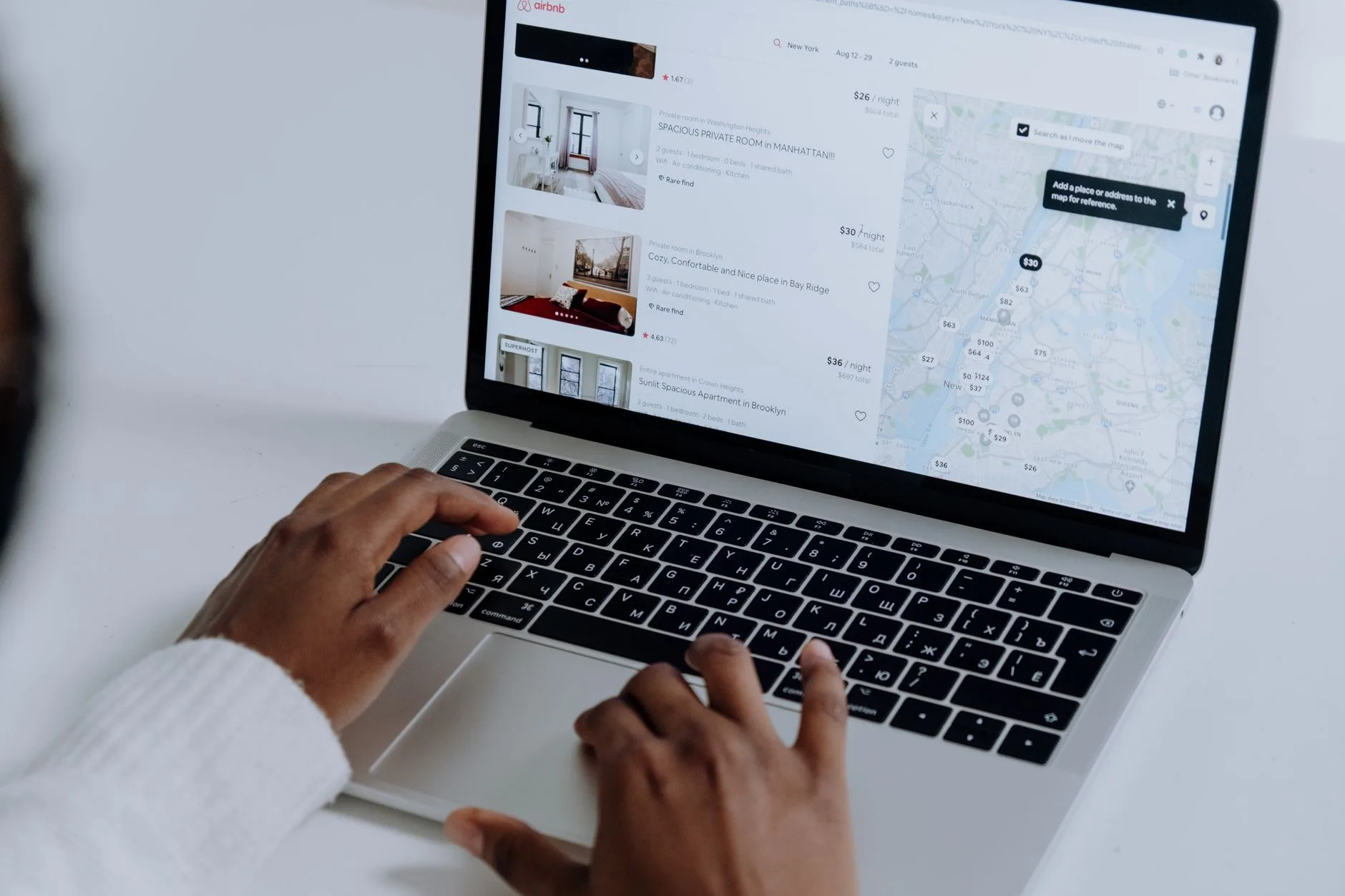
Google changed how its European search results present hotels on 8 September 2026. The loudest numbers in the direct booking debate come from Google itself. The company told Reuters that earlier changes made to comply with the European Union's Digital Markets Act cut free direct booking clicks to some European hotels by as much as 30 percent. Google also described the rollout as the largest reduction in quality of service in the search engine's 29-year history.
Those figures come from a company fighting a regulatory case. Debbie Miller's analysis for Cayuga Hospitality Consultants, published on 17 September 2026, is right to say so. The operating question for a hotel team is narrower. What changed, what is documented, and what deserves a response before the next budget cycle.
What changed on 8 September
Reuters reported that Google rolled out the changes to satisfy EU antitrust regulators. Vertical search services tied to hotels, airlines and restaurants, a category that includes Expedia and Booking.com, receive more prominent placement than suppliers that appear as a link with a telephone number and an address. The layout Google described to Reuters puts one specialised search engine at the top of the page, two others beneath it with fewer details, and a carousel of hotels, airlines and restaurants below them with features such as real-time prices stripped out. Google's algorithm sets the rankings.
Nick Fox, Google's senior vice-president for knowledge and information, said in a statement to Reuters that the changes degrade the user experience for Europeans and boost online intermediaries at the expense of local businesses. He said users outside the EU are not affected.
The fines that produced the redesign
The European Commission issued two non-compliance decisions against Google in July 2026 under the Digital Markets Act. The first, a EUR460 million fine, covers preferential treatment of Google's own services in search results across shopping, hotels, transport and sports. The second, a EUR430 million fine, covers restrictions on app developers steering users to alternative purchase channels. Google must comply within 60 days or face periodic penalties of up to 5 percent of worldwide turnover.
Reuters puts Google's total EU antitrust penalties at EUR10.38 billion.
What Google has already measured
Google's compliance update of 26 November 2024, written by its director of legal Oliver Bethell, lists more than 20 modifications to Search in Europe, including dedicated units that raise the prominence of comparison sites in flights, hotels and shopping. The same post carries the 30 percent figure in Google's own words. Airlines, hotel operators and small retailers, it says, have reported that free direct booking clicks are down as much as 30 percent since the original changes took effect.
The post also announced a test in Germany, Belgium and Estonia that removed hotel map and hotel result features for a small group of users and returned a list of plain links. Google published the results on 12 December 2024. Hotels lost more than 10 percent of their traffic while traffic to intermediary sites stayed broadly flat, users took longer to find hotels and were more likely to abandon their searches, and Google stopped the test.
Neither figure carries a published methodology or an external audit. Read the 30 percent and the 10 percent as Google-stated numbers. A hotel that treats them as measured market effects is borrowing the argument of an interested party.
What a hotel team can control
Miller's response list is a measurement brief. Establish baselines for organic traffic to the hotel website, direct booking volume and conversion rate, branded search behaviour, online travel agency contribution and acquisition cost, and metasearch performance. Compare total acquisition cost across channels, including paid search, metasearch fees, agency spend, technology, creative development and loyalty incentives. An online travel agency commission is a visible line item. A direct booking carries paid search, technology and loyalty costs that often sit in separate budgets.
The conversion side matters as much as the traffic side. Rate and offer competitiveness, mobile usability, the steps between search and confirmation, the clarity of room types, and the accuracy of amenity, parking and policy information on third-party platforms all decide whether arriving traffic turns into a booking.
European properties have the reason to move first, because the new layout applies to them. No publisher shows the layout extending beyond the EU.
What stays unmeasured
Three gaps hold the story open. Google has published no dataset behind the 30 percent and 10 percent figures. No independent party has reproduced either measurement. The effect of the September layout on direct booking share in Europe has no published reading, and the Commission is still assessing Google's changes against its July decisions.
Miller discloses the frame she writes from. She is an active member of Cayuga Hospitality Consultants, and the 30 percent figure circulates through commentary that traces back to Google and to her article rather than to an independent series. A reader who needs a defensible number for a budget case should say where the number came from.