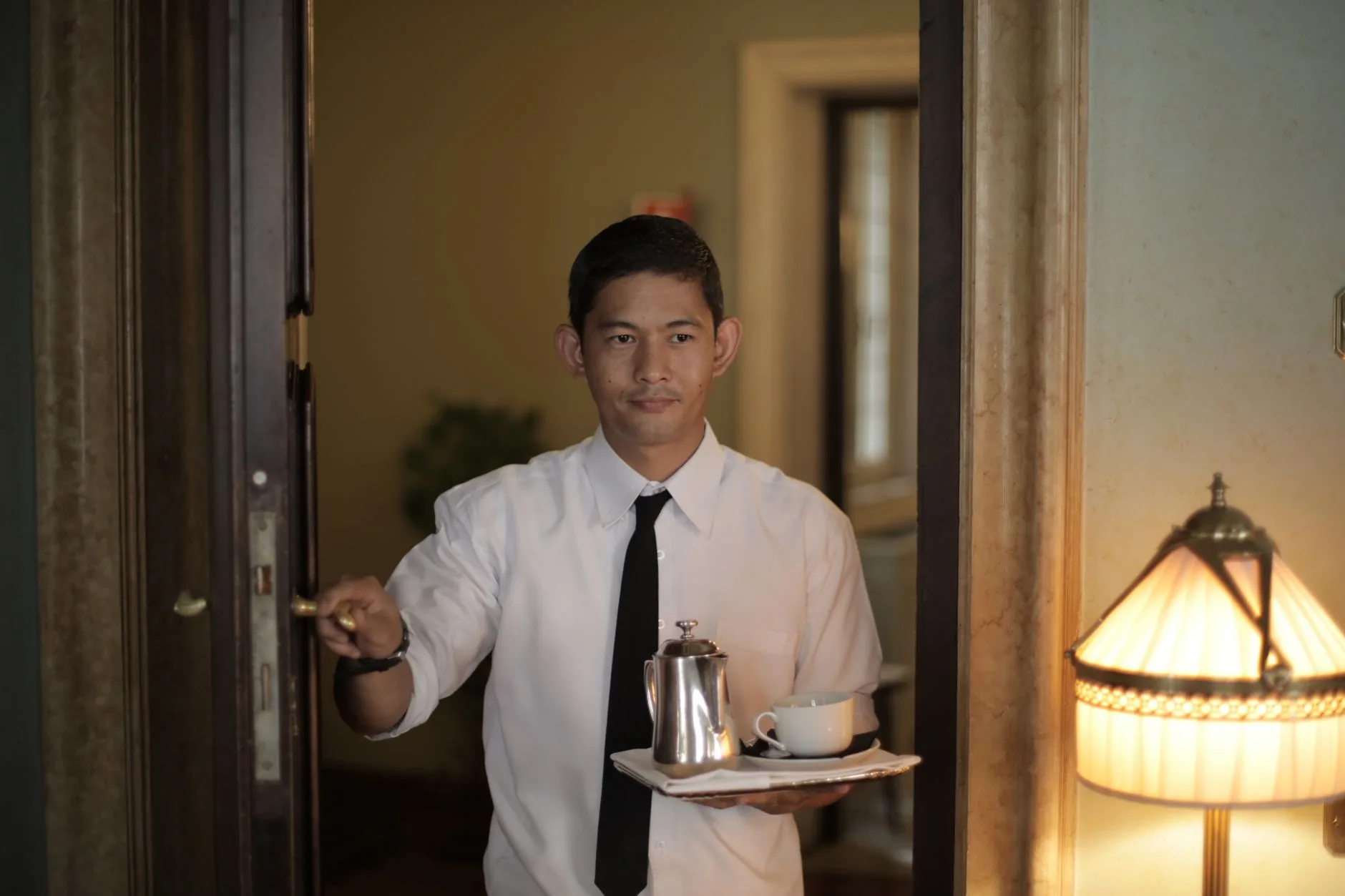
A Scottsdale resort moves room service onto the guest phone
The Westin Kierland Resort & Spa sits in Scottsdale, Arizona. The property holds 735 guestrooms, a golf course, a pool complex and a spa. It belongs to the Host Hotels & Resorts portfolio. Its food and beverage team runs in-room dining and a pickup counter at the Faro & Brag restaurant. IRIS supplies the ordering software the resort deployed for both.
IRIS published the case study on its own site on 13 July 2026. The company published the news item on 29 September 2026. Kate Fuller wrote both.
What a guest does from a phone
A guest opens the menu on a personal phone. The guest browses, customises the order and pays. The bill can go to the room. It can also go on a credit card to earn loyalty points. A guest can schedule breakfast in advance and skip the morning call.
Branded QR codes sit on the bedside tables. IRIS printed the call to action as Scan to Eat Well.
The order arrives ready for the kitchen
The order transfers straight into the resort's MICROS point-of-sale system. Nobody retypes it. The kitchen picks the ticket up as soon as it lands. IRIS reports the direct transfer cuts the wait on large orders and during busy service.
The breakfast round that went digital
Breakfast used to run a second manual lane. Staff walked every floor each evening and collected handwritten requests from 735 guestrooms. The requests arrived on door hanger cards.
Guests now pre-order breakfast inside the platform. The order reaches MICROS POS before the kitchen opens. The resort no longer prints, distributes or collects the cards.
Where the labour saving sits
Each room service order used to touch an employee twice. One person answered the phone. The same person keyed the order into the point-of-sale system. IRIS reports the digital step removed the second task.
Graham Rushin, deputy chief executive at IRIS, set the arithmetic on the property's scale. Multiply the calls answered, the orders entered and the breakfast cards collected across 735 guestrooms. He states the total adds up quickly.
IRIS also reports the team handles higher order volumes without more staff. The report ties the gain to full occupancy, when the phone lane used to sit busiest.
Order accuracy comes from the modifiers
Guests build the order inside the platform. They pick modifiers, set dietary requirements and leave a comment for the kitchen. The comment travels with the ticket. IRIS states the step reduces errors.
Mladen Kuljanin, director of restaurants at the resort, reports a faster service and the end of manual order entry.
What the deployment added in revenue
IRIS attributes two figures to the deployment. Mobile ordering revenue grew 9.4 per cent year on year. Digital order volume rose 7.7 per cent. The vendor reports higher average transaction values, and guests add drinks, sides and extras inside the ordering flow. IRIS also reports overall room service demand grew with digital adoption.
How to read the 60 per cent
IRIS prints the adoption figure in its own benefits block. More than 60 per cent of room service orders now arrive through the platform. Mr Kuljanin repeats the figure in the property's quote. No independent audit sits behind it.
IRIS reports that call volumes fell. IRIS publishes no statement that phone ordering stopped, so the balance of orders continues on the phone channel.
The poolside plan after the renovation
The resort plans to widen the rollout after its renovation. The case study names further restaurant ordering, a coffee shop pickup point and mobile ordering across 750 poolside loungers.
Three fields the case study omits
The case study publishes no deployment cost, no start date and no room-level result. The labour line rests on the total across 735 guestrooms. Every figure carries vendor and property attribution.