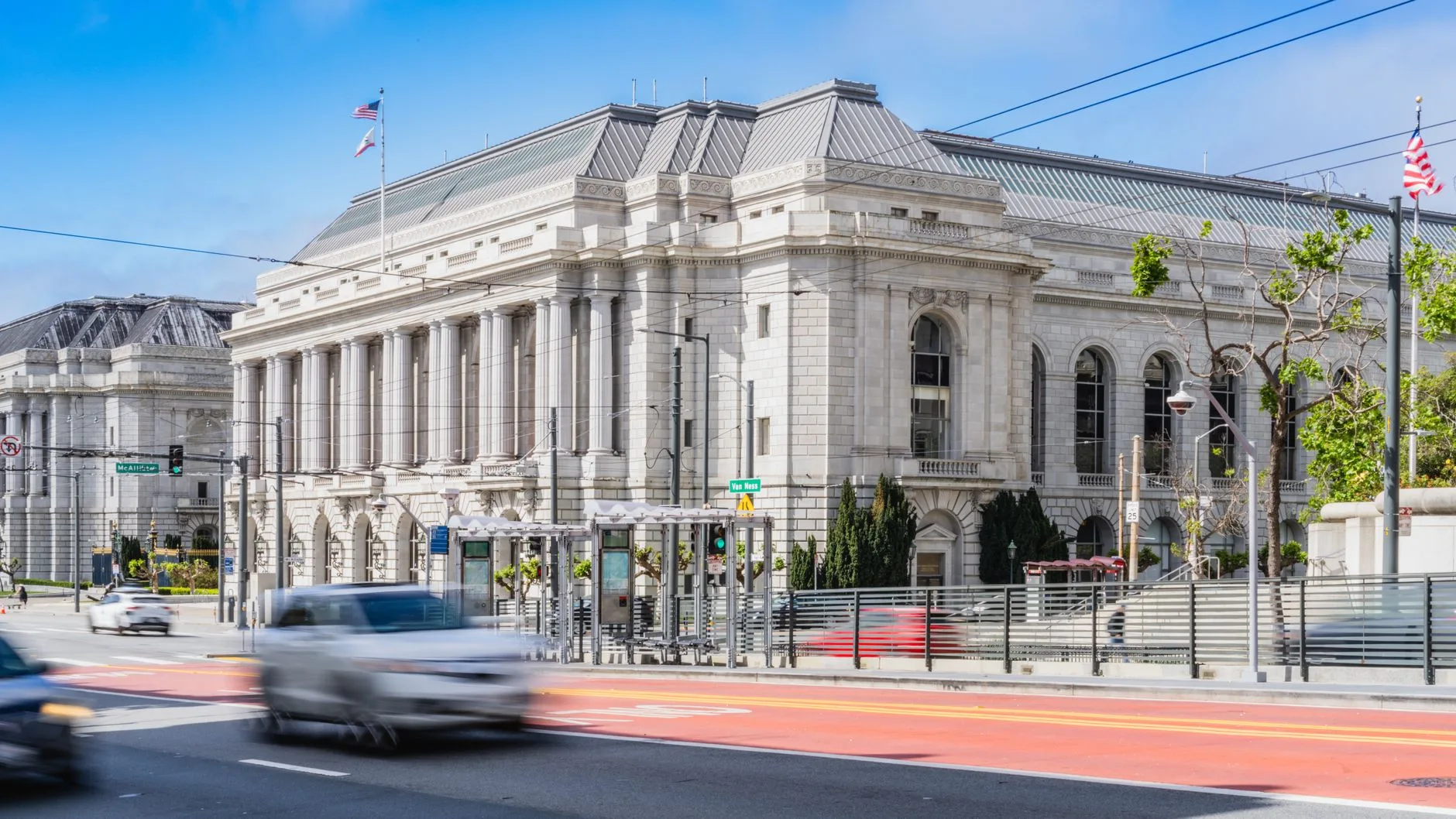
The groundbreaking sets the clock
City College of San Francisco broke ground on the Diego Rivera Performing Arts Center on 22 January 2026. Mayor Daniel Lurie and Chancellor Kimberlee Messina attended. The building carries a $181 million budget from a 2020 bond measure and a scheduled finish in 2028.
The project shrank from 100,000 square feet to 77,000 square feet during its planning years. Rudolph and Sletten, a Tutor Perini subsidiary, holds the construction contract at $155 million, announced on 17 December 2025.
The programme the design team published
LMN Architects and TEF Design list three venues: a 600-seat multi-purpose performance hall, a 150-seat studio theater and a 100-seat recital hall. The building also carries instructional space, practice rooms and administrative offices.
The building becomes the home of the music and drama departments. The front entrance opens into a glass-wrapped lobby that faces Frida Kahlo Way and holds the Pan American Unity mural.
Two calendars in one building
An academic building runs a term calendar. A performance venue runs a show calendar. This building runs both.
Daytime hours belong to classes, rehearsals and set construction. Evening and weekend hours belong to ticketed performance, recitals and public events.
What a 600-seat house adds to the calendar
A full house produces 600 arrivals inside a short window before curtain and 600 departures inside a short window after it. The hall also sets the upper bound on a single night's attendance inside the district.
Most of those guests live in the city and travel home. Hotel demand comes from three groups: the out-of-town family attending a student performance, the visiting company on a run of dates, and the donor group that books a reception around a show.
A run of performances produces consecutive nights. A single concert produces one. No published document lists the venue's performance calendar, so a property plans for both and prices the difference.
The small rooms carry the midweek
A 150-seat studio theater and a 100-seat recital hall book more often than a main hall. Student recitals, departmental showcases, masterclasses and community hires fill midweek evenings at low capacity.
Those events produce few room nights. They produce steady Tuesday and Wednesday covers in food and beverage, and they give a sales manager a dated event to attach a package to.
The small rooms fill the calendar between weekends, and that calendar sets midweek rate decisions.
The mural lobby as a package product
The lobby facing Frida Kahlo Way holds the Pan American Unity mural. Diego Rivera painted it in 1940 for the Golden Gate International Exposition on Treasure Island. It is 74 feet wide, 22 feet tall and weighs 30 tons. It hung in the campus theatre lobby until 2021, when it moved to SFMOMA for conservation and display.
TEF Design describes the front entrance as doubling as an exhibit hall for the mural, with climate control to protect the paint.
That space supports a reception product. A pre-show drinks package, a donor dinner and a school group visit use the same room, and each one books against a performance date.
Rate setting against a term calendar
Performance density follows the academic year. Term time brings student and faculty performances. Breaks bring rentals, outside presenters and dark weeks.
Set rate fences on event dates. Hold the weekend premium for the term and quote a lower rate into a dark weekend, so the group that would have booked it stays.
Package design follows the same logic. Build the package around a dated performance, quote it as a two-night stay with a late checkout, and price the second night against the published show calendar.
What the college has not published
City College has published no venue calendar, no capacity by event type, no parking plan, no transit plan and no hotel programme tied to the venue.
City College operates the building. A hotel sales manager should request the first published season from the college's performing arts department and rebuild the rate calendar from that document.
The run-up to 2028
The window is long enough to build a group series, sign a shuttle arrangement and get the property onto the venue's booking list.
Three dates belong on the revenue calendar: the venue's first published season, the certificate of occupancy, and the first academic term that runs with the hall open.
Until the first date exists, price the district on the demand already there and hold the event premium for a calendar you can read.